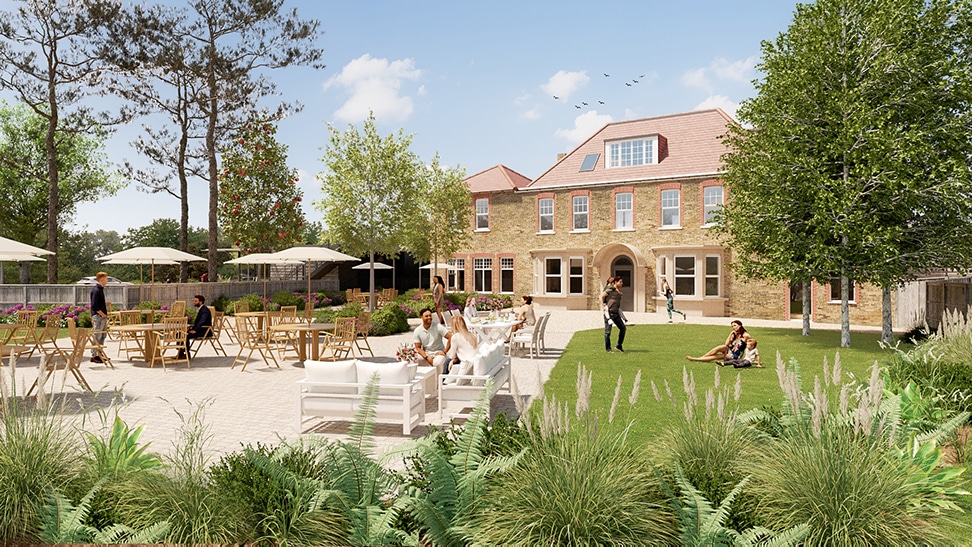
The brief
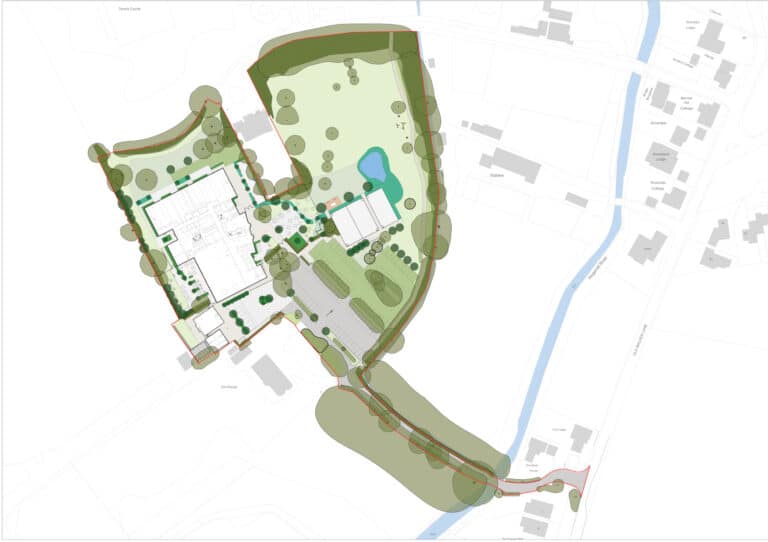
This sports club in Kingston is located in Metropolitan Open Land (MOL). The brief from our client was to improve the club’s facilities including new gymnasium and swimming pool.
For information on this project see River Club project page.
The importance of strategy:
In this project we adopted the following strategies to help navigate the project through planning:
- Landscape first and buildings as backdrop. All our presentations to the local authority in the early stages emphasised landscape design as the predominant concept. Landscape design was fundamental to the success of the project.
- All new buildings were located on hardstanding or previously developed land.
- The importance of understanding how the sports offer the club would provide supplemented other sports provision in the borough.
- Early-stage collaboration with the local authority.
The Green Belt and exceptions:
The development is located in the Green Belt. In terms of the exceptions set out in the NPPF we established the following:
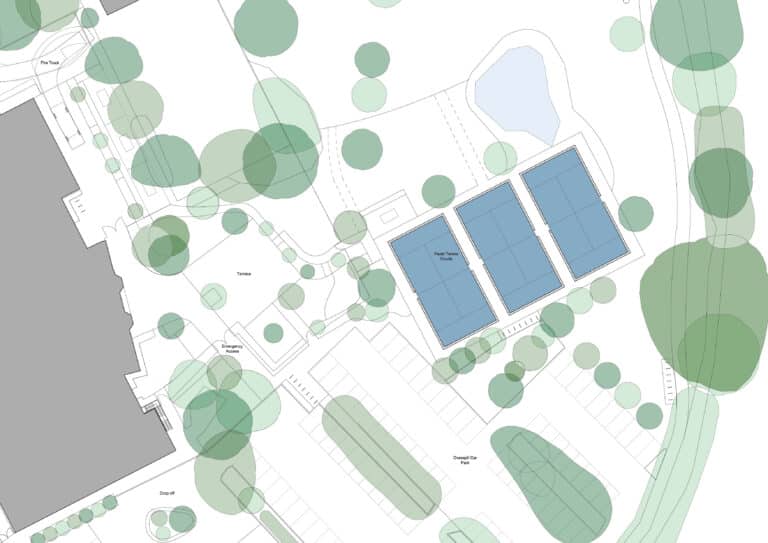
- The proposed padel courts were considered to be provision of an appropriate outdoor facility.
- The padel courts would be open to use by the wider community and therefore meet the exceptions test and were not considered inappropriate development.
- The proposed extensions and alterations to the main building at the River Club were considered to be an exception and therefore appropriate.
- The application site is considered to be previously developed land as defined by the NPPF. The redevelopment of such sites is an exception to the normal policies. It was therefore considered appropriate as it retained the openness of the Green Belt.
The openness of the Green Belt:
Openness in the Green Belt — the three “critical” criteria
When assessing harm to Green Belt, openness remains central. Openness has several dimensions:
Spatial openness
This is about how much land is occupied by built form (or other development) versus how much is free/open: in other words, the footprint and how development “fills in” the Green Belt parcel.
Spatial openness considers whether the built mass intrudes into previously open land, fragmenting the open character.
Visual openness
This is about how the development looks in the landscape: whether buildings or structures are visually prominent, whether they are obscured or screened, their height relative to the landscape or skyline, and how they appear from key viewpoints.
Volumetric openness
This relates to the volume of built development: not just the footprint, but the massing and how “bulky” the development is.
In 2024 the NPPF introduced a specific test under which development on certain grey belt land (and previously developed land) is considered not inappropriate. The test states that: The development would utilise grey belt land and would not fundamentally undermine the purposes of the remaining Green Belt across the area of the plan.
This test applied to our development. Prior to 2024 due to the overall impact of the proposals and the amount of built form, the scheme would have been considered inappropriate development unless very special circumstances existed that would have outweighed any harm to the Green Belt.
The very special circumstances (VSCs) test therefore was not as important as it would have been had these changes not taken place. However articulating these VSCs did help to strengthen our value proposition.
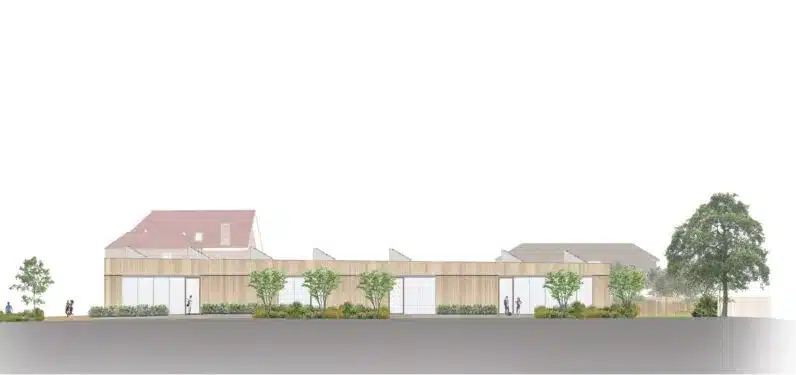
The main gym building was proposed to be constructed on the existing tennis courts. This was considered to be the least visually intrusive location. The building was designed to have minimal impact on the openness of the Green Belt.
It incorporated the following features:
- Single storey in height to reduce the visual impact.
- A green roof to harmonise with the surrounding landscape.
- Carefully selected materials including timber cladding for example which would be in keeping with the site and surroundings.
With our client we articulated the following VSCs that would have enabled the project to be considered for approval:
- Improvement of Existing Facilities, including DDA compliance
- The new gym and studio building would provide a modern, purpose-built building suitable for housing the larger equipment found in modern gyms.
- The proposed new pool enclosure will replace the existing outdated enclose which overheats in the summer and suffers from extensive condensation.
- Upgraded changing rooms which will accommodate approximately 40 men and 40 women seated.
- The brand new padel courts will be a valuable addition to the club and will be accessible to both members and non members, on a pay as you play basis.
- Offering community access to this larger pool will help to address the unmet demand within the Borough.
- The proposals would result in social and economic benefits including community use of the new swimming pool and employment opportunities provided by the River Club.
- The upgraded community hall would continue to offer a community space to host events such as classes, sports activities as well as serve as a multi-purpose space for all uses.
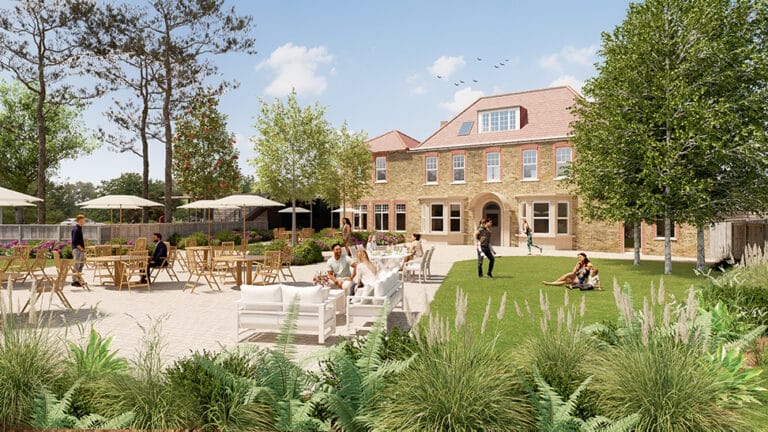
- The proposals will seek to make improvements, in terms of architectural appearance, to the existing main house by way of removal of the glass conservatory additions which are both poor quality and poor design. These will be replaced with a more sympathetic design which relates to its surroundings.
- The proposals have also been designed with increased levels of glazing, enabling members and visitors visual access to the surrounding MOL.
- Upgraded thermally to meet new sustainability standards, by incorporating modern heating and ventilation.
- The proposals would open the club up to the community at certain times and day, thereby increasing public access to this part of the MOL.
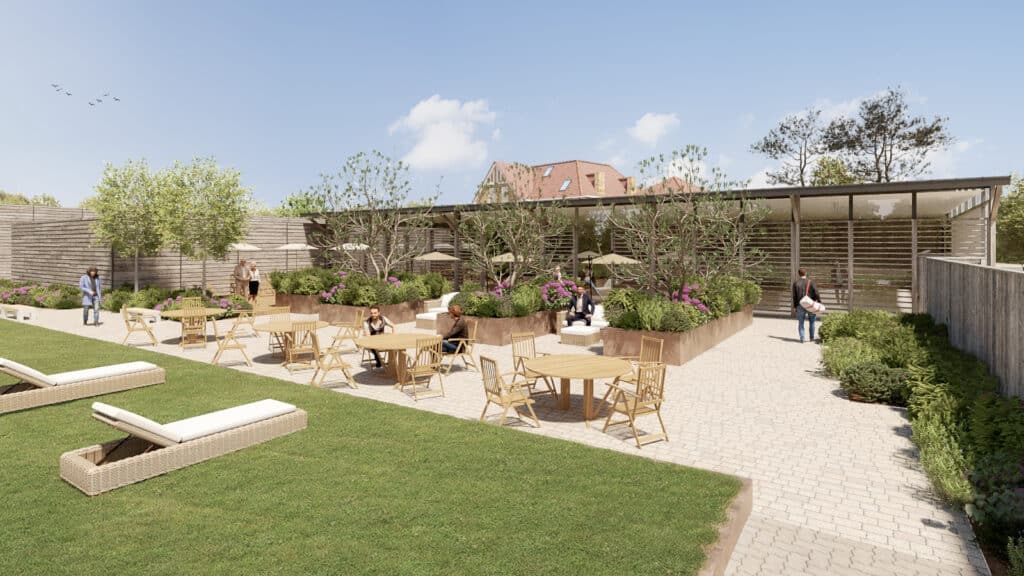
- Significant ecological and landscape enhancements are proposed as part of the development.
When considered together, these benefits / very special circumstances were considered enough to outweigh the limited harm to the openness of the Metropolitan Open Land/ Green Belt.
Maintaining the openness of the Green Belt:
We made the argument that our scheme provides appropriate facilities (in connection with the existing use of land) for outdoor sport, outdoor recreation and at the same time preserves the openness of the Green Belt. The openness of the Green Belt is achieved through the design of a compact development using the footprint of the existing changing rooms, pool and house as the central components of the design. The main extension involves building on hardstanding.
Social Value of the project
The social value of architecture is in fostering positive emotions, whether through connections with nature or offering opportunities for an active lifestyle, connecting people and the environment in appropriate ways.
There is also social value in participation, supporting communities to help design and build their neighbourhoods.
Social value includes the wider social, economic and environmental benefits the River Club will create for the club owners, members and local communities they serve. The aim of the development is to create architecture for social purpose including:
- Creation of jobs and apprenticeships.
- Wellbeing generated by design and healthy community.
- Designing with the community and creating local employment.
- Learning developed through construction.
- The wider community benefits from the asset including providing places for the community to gather and meet.
- There has been a focus on placemaking and creating new landscaped spaces and community spaces.
- Creation of employment for young and disadvantaged people.
- Creating opportunities for training and local employment.
- Supporting local small business including the café, physio, doctor, for example.
- Enhancing wellbeing and fitness within the local community.
- Helping to reduce obesity in young people through the provision of specialised trainers and fitness programs.
This project was granted planning permission by the London Borough of Kingston on Thames in October 2025.