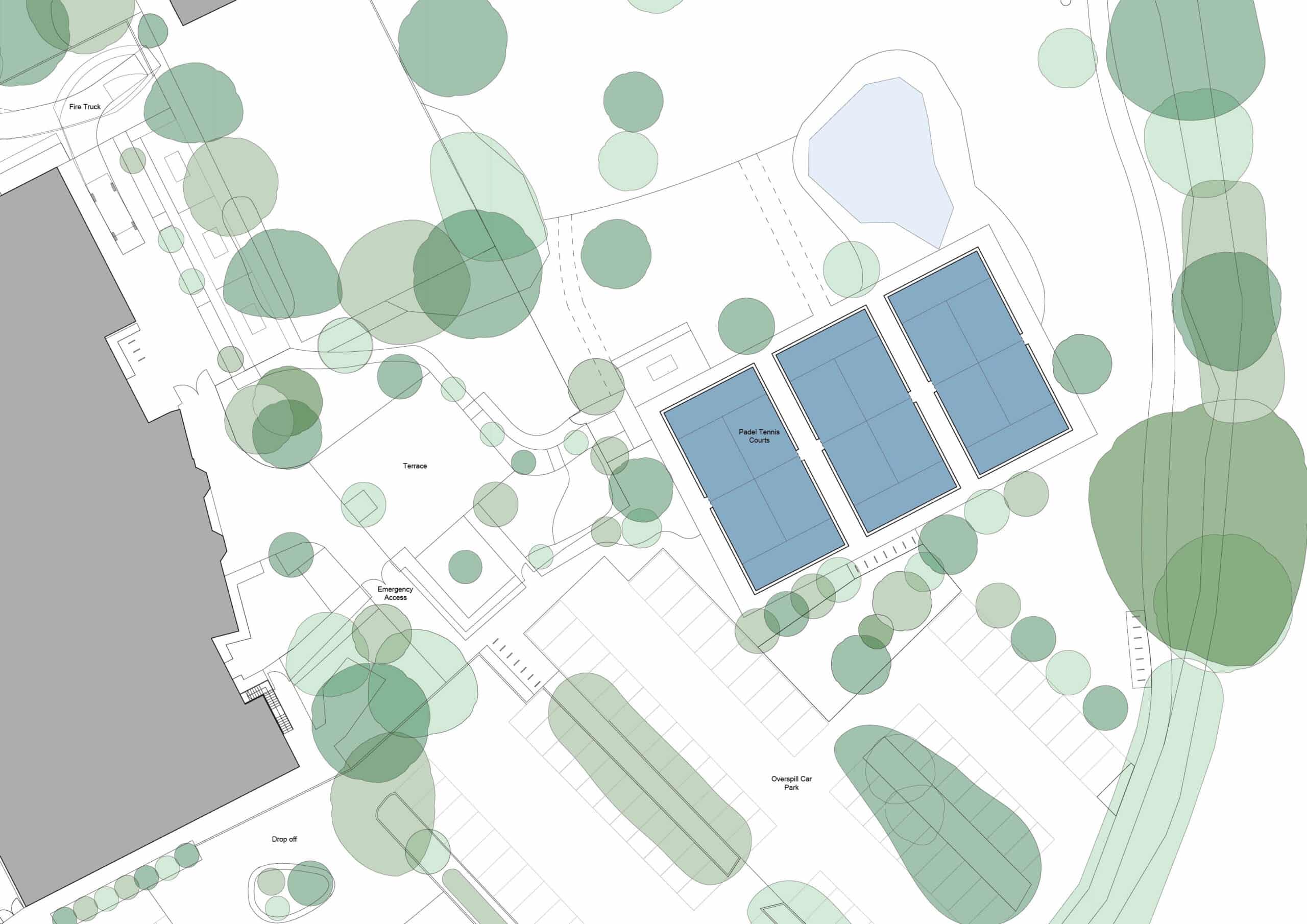
Planning is complex. Many padel courts are in parks and therefore are subject to local planning constraints. Some may also be in green belt locations where there are extra restrictions. To help you with the process I have created our top five tips to help you prepare for planning permission for a padel facility:
1. Complete a Feasibility Study and assess risks
You and your team should begin by interrogating design options during feasibility. Design changes later can lead to planning delays or additional costs. During the feasibility study assess if the padel courts will be open or fully enclosed with a roof or if you want artificial lighting. All this has a huge impact on planning and cost.
Make sure you establish if permitted development might be possible (this means a full planning application is not necessary). If permitted development does not apply then a full planning application will be required.
You will need a planning consultant to work closely with your architect as padel courts fall within Class E(d) of the Use Classes Order. Padel is a “main town centre use” which means padel centres are subject to the town centre first policy. If your proposed site isn’t in a town centre, a sequential assessment will be completed by a planning consultant.
A sequential assessment is a test applied to certain types of development proposals — especially those that generate significant footfall (such as leisure, retail, or town-centre uses like a padel centre) — to ensure they are located in the most appropriate place.
A sequential assessment is a planning requirement that tests whether a padel centre (a leisure use) could be located in a town centre before being placed elsewhere. This assessment will make the planning application both robust and defensible.
You also need to consider if a pre-application submission to the local planning authority would be beneficial to identify any issues early.
2. Get your project costed early
Ensure all your early design options costed so to help you decide what type of facility and how many courts you will be applying for.
3. Identify Ecological Constraints early
Determine if your project needs ecological surveys or Biodiversity Net Gain (BNG) assessments.
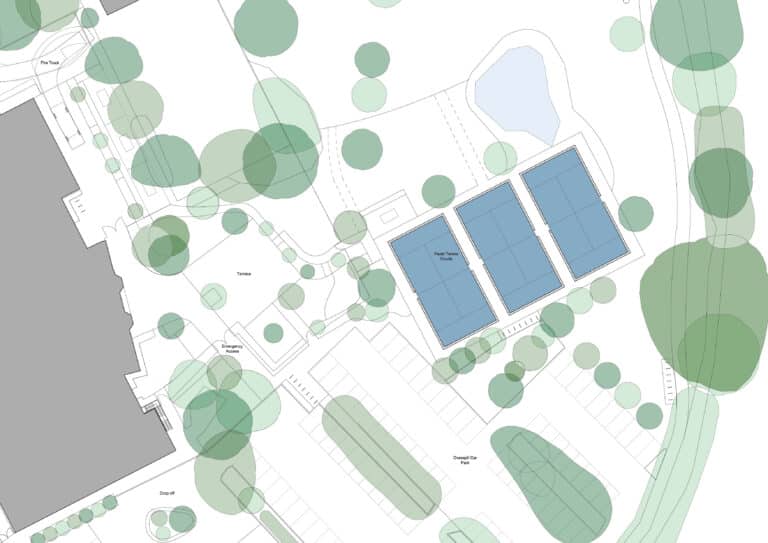
You may need an arboricultural survey to make sure you are not building within a tree root protection zone.
4. Consider the acoustic impact
You may need noise surveys to assess the impact of the courts on the neighbours especially if the courts are located close to a residential area.
Racquet-on-ball contact, is the most dominant source of noise in terms of both frequency and overall sound level. Other sources of noise include the ball hitting the metal fence or striking the glass at either end of the court.
Ideally the courts are located far away from neigbours. If that is not possible, there are options for mitigation, including barriers/screening. This can be in the form of an “acoustic mass barrier” to provide a sound reduction.
If you are considering a roof over the courts to allow all year-round play a standard PVC tent structure roof could be used with the acoustic mass barrier stitched into the sides. It really depends on the situation
5. Engage the Community Proactively
It is always a good idea to communicate with the local community early in the process. Letters of support from the community can strengthen your application.
By consulting with them you can address concerns before they become objections.
Knowing all this upfront will help to ensure delays do not extend project timescales and eat into your profits.